
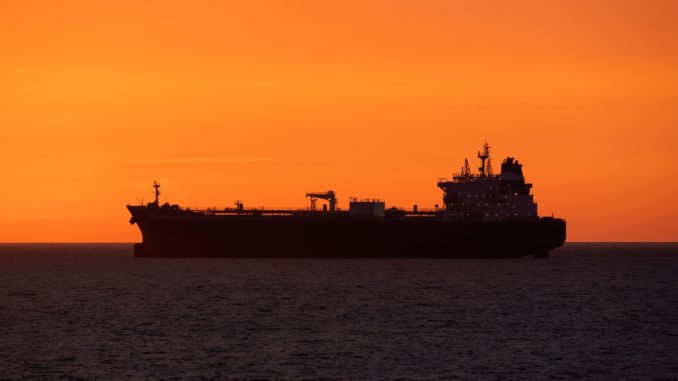
The Navy has Iran's oil exports sitting at zero.
Now the Justice Department found something in the history books that could make Tehran pay for every tanker it loses.
The last time America used this legal weapon, Abraham Lincoln was president.
DOJ Revives Maritime Prize Courts Dormant Since the Civil War
The Department of Justice is reviving maritime prize courts – a wartime legal mechanism dormant since World War II and largely unused since the Spanish-American War of 1898.
Under the law, ships and cargo captured from an enemy can be condemned by a federal judge, sold at auction, and the proceeds deposited directly into the US Treasury.
President Lincoln invoked this authority during the Civil War to seize ships running his blockade of Confederate ports.
The Supreme Court upheld him in 1863 – ruling that a presidential blockade is legal even without a formal congressional declaration of war.
Trump's blockade of Iran, imposed in April after the collapse of peace talks, operates on that same constitutional foundation.
US Attorney Aaron Reitz, whose Southern District of Texas office is partnering with DOJ headquarters in Washington, confirmed the revival is underway.
"Prize law is an ancient body of maritime law – already codified in statute but which we are now reviving – that sets the rules for how seized maritime property is condemned, returned or disposed of," Reitz said.
Reitz said the Southern District was prepared, citing its position at the heart of American maritime power and energy commerce.
"Our national security interests may require the United States military to seize vessels or cargo supporting the enemy during military conflict," Reitz said in a statement to Fox Business. "If that happens, our federal courts must be ready to adjudicate the disposition of these captured vessels and cargo."
Legal challenges are certain to follow.
Shipping companies with vessels seized in the blockade will contest the proceedings.
The 1863 Supreme Court precedent gives Trump exactly the legal footing he needs: a president does not need Congress to formally bless a blockade before the captures become lawful.
How Seized Iranian Oil Tankers Pay for the Blockade Against Tehran
The government's existing tool for claiming seized ships – civil forfeiture – has become an obstacle course.
In one ongoing case involving a Venezuelan supertanker linked to Iran, competing claimants have flooded the same proceeding: the shipping company and families of Iranian terrorism victims holding court judgments all assert rights to the same vessel.
Prize courts cut through that mess entirely.
Once a federal judge condemns a ship as a lawful prize of war, the United States takes title.
The oil gets sold.
The money goes to Washington.
As of August 27, US Central Command forces had redirected 75 commercial vessels, disabled three, and boarded two to enforce the blockade – while Iran has exported zero barrels of oil from its shores since mid-July.
Treasury Secretary Scott Bessent launched Operation Economic Outcast the same week – an economic siege the administration called its most aggressive financial assault on a foreign adversary in 80 years – with the explicit goal of choking off every revenue stream keeping Tehran alive.
Trump laid out the asymmetry in a single line: in the past two weeks alone, the United States guided 130 million barrels of allied crude through Hormuz. Iran got zero.
Prize courts add a financial dimension that turns every tanker the Navy intercepts into a revenue source.
Eugene Kontorovich, an international law professor at George Mason's Antonin Scalia School of Law, had been pushing this approach since May and said it accomplishes two things at once.
"It helps offset the price of the war," Kontorovich said. "It also shows Iran that America is really treating this as a serious international blockade and is willing to use all the tools at its disposal."
The IRGC – Iran's Islamic Revolutionary Guard Corps, a US-designated terrorist organization – controls large portions of Tehran's oil sector.
Every barrel that ends up in a federal prize court auction is a barrel taken from the same group that has financed Hamas, Hezbollah, and the Houthis for decades.
Iran's oil goes nowhere.
What the Navy captures goes to court.
What the court condemns goes to auction.
And the check goes to the United States Treasury.
Sources:
- Eric Revell, "DOJ plans to revive maritime prize courts to seize Iranian oil tankers as war prizes: report," Fox Business, August 27, 2026.
- Ward Clark, "DOJ Moves to Confiscate Iran Oil As Legal War Prize," RedState, August 27, 2026.
- Eugene Kontorovich, post on X, August 27, 2026.
- "CENTCOM: U.S. Clears Iranian Mines from Hormuz Lanes; Iran Oil Exports at Zero – Trump Says Tehran 'Begging to Make a Deal,'" Breitbart, August 28, 2026.
- "Goods Are Not Coming In: Tehran Braces for Unrest as Trump Intensifies Economic Offensive," Breitbart, August 28, 2026.