
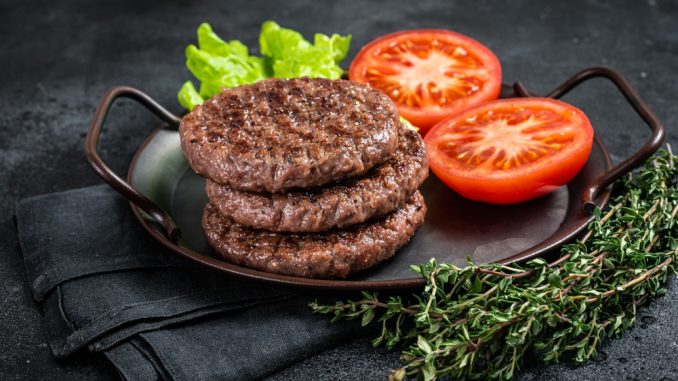
American families have been paying record prices for ground beef.
Now the CEO of America's fourth-largest beef processor just told grocery shoppers something they have not heard in three years.
His announcement marks the first real turning point in a cattle crisis 75 years in the making.
Ground Beef Prices Hit Record Highs as the US Cattle Herd Shrank to a 75-Year Low
The US cattle herd entered 2026 at 86.2 million head – the smallest since 1951 and down from 94.7 million animals in 2019, a loss of more than 8 million head in seven years.
Drought hammered ranchers across the Midwest and South year after year while feed costs exploded with inflation.
The 2025 calf crop came in at 32.9 million head – the smallest since 1941.
Tyson Foods closed processing plants in Illinois, Utah, and Washington because there simply were not enough cattle to keep them running.
Every missing animal showed up at the checkout counter.
Choice beef climbed from $8.51 per pound in August 2024 to $10.49 per pound by July 2026, while ground beef hit $6.89 per pound nationwide.
Americans spent more than $45 billion on beef last year and bought more of it even as prices climbed – because families don’t swap beef for chicken when times get hard.
National Beef CEO Says Ground Beef Prices Are Turning in 2026 and Here Is Why
National Beef CEO Tim Klein told reporters that the industry's two-year losing streak is over.
"We do believe we are through the worst part of the cycle," Klein said.
The Missouri-based company posted a 2.1% earnings margin in the third quarter – its highest in two years.
JBS reported improving US beef results the same week – two of the country's biggest processors posting gains simultaneously.
Reduced slaughter volumes drove the first improvement – fewer cattle being processed means processors stopped competing against each other for a dwindling supply.
Tyson's plant closures removed overcapacity from a system that had been strangling itself.
Trump's decision to reopen the Mexico border to live cattle shipments added supply that processors had been starved of since the border closed over a screwworm outbreak in 2024.
Klein projects the fourth quarter to be even stronger than the third, with 2027 margins expected to exceed this year's average.
Omaha Steaks CEO Nate Rempe said this summer that meaningful price relief at the retail level would not arrive until 2028 or 2029.
That means prices stay elevated for now – but for the first time in years, they are retreating instead of climbing.
A 1% uptick in replacement heifers means ranchers are starting to rebuild, though the math of recovery is painfully slow – it takes years to grow a calf into a market-weight animal.
Why American Ranchers Are Furious About the Plan That Is Finally Bringing Beef Prices Down
Trump's import campaign against high beef prices started in February with a proclamation expanding Argentine beef imports, then escalated in August to 300,000 metric tons of foreign beef at a 25% discount – a decision opposed by every major agricultural organization in America.
National Cattlemen's Beef Association CEO Colin Woodall said the association could not "stand behind the President while he undercuts the future of family farmers and ranchers by importing Argentinian beef."
American Farm Bureau President Zippy Duvall wrote that Trump's import plan would "discourage American farmers and ranchers from making long-term investments in herd rebuilding."
America's ranchers – Trump's most reliable voters – are the ones who took the market hit while beef processors quietly collected the gains.
That import decision angered every ranching organization in America – and it also helped break a three-year cycle that was costing American families at the checkout counter every single week.
Trump signed two executive orders on September 4 aimed at the deeper structural problem – the Ranchers First Initiative, which gave ranchers the right to sell meat directly to consumers for the first time, backed by $80 million in small processor funding programs already running since March and an antitrust probe into meatpacking consolidation he ordered in December 2025.
The company making that announcement is exactly what those orders are designed to fix.
National Beef is controlled by Brazil's MBRF Global Foods SA – a South American conglomerate that now runs the fourth-largest beef processing operation in the United States, the direct result of decades of consolidation that handed American food infrastructure to foreign ownership.
Three weeks ago, Trump made another Argentina beef announcement that sent cattle futures sliding more than 15% – proof that the tension between lower grocery prices and rancher survival is not settled.
The crisis is not over for the rancher in Nebraska or the cattleman in Texas.
But for the family that has been getting hit at the checkout counter for three straight years, the worst is finally behind us.
Sources:
- Tyler Durden, "America's Top Beef Processor Sees 'Worst Part' of Cattle Cycle Over," Zero Hedge, Nov. 15, 2026.
- Peter D'Abrosca and Hannah Brennan, "Trump's Beef Import Scheme Wreaks Havoc on Fed-Up Red State Cattle Ranchers," Fox News Digital, Sept. 16, 2026.
- Staff, "A Historic Shortage Is Squeezing an American Dinner Staple and Relief Could Be Years Away," Fox Business, Aug. 16, 2026.
- Staff, "Trump Beef Price Plan Draws Pushback From Ranchers, Republicans," Fox Business, Aug. 21, 2026.
- Staff, "Cattle Ranchers Are Getting Grilled 30 Days Into Trump's Foreign Beef Blitz," Daily Caller, Oct. 19, 2026.
- Staff, "Fact Sheet: President Donald J. Trump Promotes Fair Competition in Livestock Markets and Expands Market Access for American Meat Producers," WhiteHouse.gov, Sept. 4, 2026.