
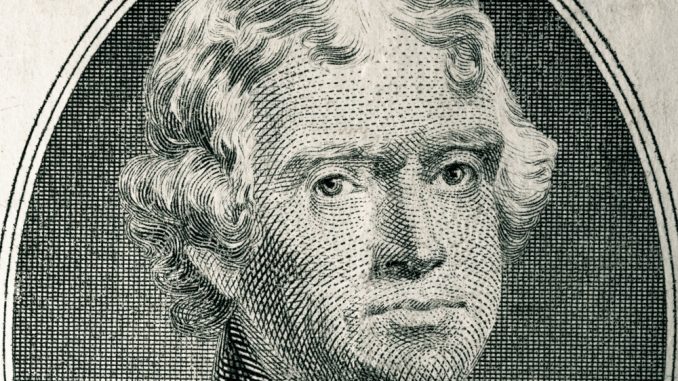
Thomas Jefferson documented nearly everything – his grocery bills, his nail production, his seed experiments.
Now archaeologists have found something at Monticello he never put on paper.
And what they pulled out of the ground wasn't in a single map, letter, or drawing Jefferson ever made.
The Brick Kiln Jefferson Left Off Every Map and Letter
Workers began excavating the east side of Monticello in March 2026 – and hit brick almost immediately.
What emerged from the ground was a massive brick kiln dating to the early 1770s.
It dates to the construction of Monticello I – the original house Jefferson built starting in 1768, before he ever wrote the Declaration of Independence.
Crystal O'Connor, manager of archaeological field research at Monticello, said the team found brick channels "filled with overcooked brick rubble, and the soil beneath them had been baked hard by intense heat."
The pattern – low parallel brick walls spaced about eighteen inches apart – is the unmistakable signature of an 18th-century industrial kiln.
Workers once stacked thousands of unfired bricks on top of it, kept fires burning for several days, and then carried the hardened bricks up the hill to build Monticello.
https://twitter.com/archaeologymag/status/2042673978574279142
The Custom Bricks That Let Archaeologists Date the Entire Kiln
The kiln alone would have been a major find.
Then O'Connor's team found the mold bricks.
Several bricks at the site were stamped with initials and shaped in custom molds – curved profiles, S-shapes – designed specifically to match Jefferson's architectural vision for the dining room exterior wall.
"They don't appear anywhere else on the house," O'Connor said.
That single detail locked the dating.
Jefferson wasn't buying off-the-shelf construction materials and slapping them on a house.
At a time when most Virginia builders were still importing brick from England, Jefferson fired his own from clay dug on the property.
He was commissioning custom-molded architectural bricks more than 250 years before anyone knew where they were fired.
O'Connor said: "This kiln was crucial to building the home of the author of the Declaration of Independence."
How Thomas Jefferson Managed Every Brick Without Recording Where They Were Made
Jefferson knew about every brick – and the discovery proves it.
O'Connor confirmed he "contracted with his brickmakers for a set number of bricks before each major building campaign" – Jefferson was the project manager, calculating logistics down to whether it was more efficient to haul finished bricks uphill or fire them closer to the raw clay deposits.
By late 1774, Jefferson had done the math and moved brick production downhill – closer to the clay, eliminating the problem of dragging water and firewood up the hill.
He just never wrote down where the kiln was.
The operation was managed by one of two hired workmen – George Dudley or William Bishop – with slaves doing the physical work of firing and hauling.
The men who built Monticello's walls were building the home of the man writing the words that would define a nation.
Why Founding Fathers Estates Keep Surprising Archaeologists Centuries Later
This is not the first time archaeologists have found something at a Founding Fathers' estate that the owner never put on paper.
Monticello's own digs have turned up Hemings family artifacts, the foundations of the South Wing, and evidence of Jefferson's vegetable garden operations – none of it in his notes.
The men who wrote America's founding documents wrote down their ideas and left the construction crews to figure out the rest.
O'Connor said it plainly: "Even at one of the best-documented historic sites in America, archaeology keeps revealing what the written record does not."
Jefferson was the most meticulous note-taker of the Founding era.
The man who recorded his grocery bills in longhand never wrote down where he built his kiln.
Archaeologists found it anyway.
Sources:
- Andrea Margolis, "Discovery at Monticello reveals construction secrets Thomas Jefferson left out of maps and letters," Fox News, April 13, 2026.
- Thomas Jefferson's Monticello, official statements and field research reports, 2026.
- Thomas Jefferson's Monticello, "Archaeology at Monticello," Monticello.org, 2026.
- "Monticello," History.com, May 28, 2025.