
The Left spent decades insisting the Bible was mythology – stories invented by ancient priests to control illiterate peasants.
Now one of America's most trusted conservative voices has spent three years digging up what those critics never wanted you to see.
What he found in the soil of Israel didn't just challenge the skeptics – it buried them.
Dinesh D'Souza Went Looking for Proof of the Bible and Kept Finding It
Dinesh D'Souza wasn't searching for a faith project when he first landed in Israel in December 2022.
He was invited as a speaker on a nine-day Salem Media tour – the same sharp political mind who has spent his career dismantling liberal narratives with facts and film.
But when he stood at the Pool of Siloam – the very pool where Jesus healed a blind man – something shifted.
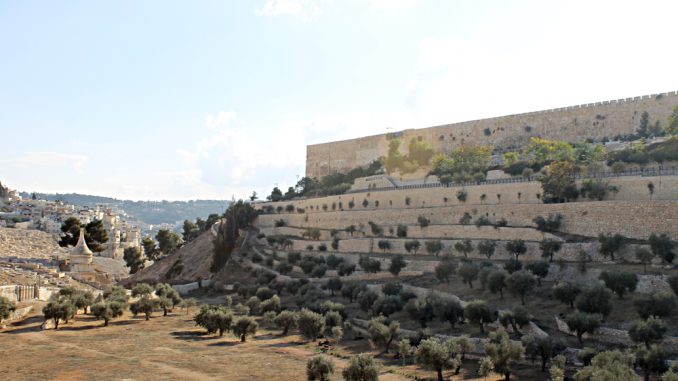
He walked the Pilgrimage Road that Jesus walked, then stood at the ruins of King David's palace looking out over the same Jerusalem rooftops.
And he asked the question secular academics have spent careers trying to suppress: Is any of this actually true?
Not on the level of faith. On the level of evidence.
"If it's true," D'Souza said, "why isn't anyone shouting it from the rooftops?"
He went back. Again and again. Three years of excavations, expeditions, and conversations with archaeologists pulling artifacts from the ground that the evening news will never cover.
The result is The Stones Cry Out: Biblical Archaeology, Prophecy, and the Last Days, hitting shelves October 13.
The Pilate Stone, the Caiaphas Ossuary and What Biblical Archaeology Actually Proves
The pattern D'Souza found wasn't a trickle – it was a flood.
Start with Pontius Pilate.
Skeptics spent generations insisting the Roman governor who ordered the crucifixion of Jesus was a fictional character – a convenient villain invented to give the story dramatic weight.
In 1961, a limestone block came out of the ground at Caesarea Maritima bearing his name in Latin.
The Pilate Stone identified the governor with the precise title the Bible assigned him: "prefect of Judea."
"Boom," D'Souza said. "Not only does it confirm the existence of Pilate, but the Bible writers had his title exactly correct."
Skeptics were right that Pilate's title was later changed to procurator – but that change came after Jesus's lifetime, which means the Bible had the right title at the right time.
Then there is Caiaphas – the high priest who orchestrated the trial of Jesus and handed him to Pilate for execution.
For centuries, he existed mainly between the pages of Scripture.
In 1990, Israeli archaeologists working in Jerusalem's Peace Forest struck a burial cave.
Inside was an ornate limestone ossuary – a first-century Jewish bone box – inscribed with the Aramaic name "Yehoseph bar Caiapha."
They opened it.
Inside lay the bones of a 60-year-old man, dated to the first century A.D.
"We not only have an inscription or reference to him," D'Souza said, "we have his actual bones."
The high priest who handed Jesus over to be crucified is not a literary invention.
His remains sit in a museum in Jerusalem.
When Archaeology Confirms the Bible Down to the Footnotes
The skeptics' favorite argument has always been absence of evidence.
D'Souza dismantles it with the people the Bible barely mentions.
There is Balaam – a diviner appearing in just a few sentences of the Old Testament.
The King of Moab summoned him to curse the Israelites crossing his territory toward the Promised Land.
In 1967, archaeologists excavating Deir 'Alla in modern-day Jordan found an ancient plaster inscription referencing "Balaam, son of Beor" – matching the name and lineage of the biblical figure exactly.
A man with a walk-on role in Scripture left his name on the wall of a Jordanian ruin twenty-six hundred years later.
Then there are two minor officials in the Book of Jeremiah – men who threw the prophet into a muddy cistern and vanish from the text in the same breath.
Clay seals bearing their names came out of the ground in Jerusalem.
"Archaeology is digging out of the ground artifacts that are a decisive refutation of the things that they say," D'Souza told Fox News Digital.
The armchair critics who built careers dismissing Scripture have a problem now: the ground keeps proving them wrong.
What the Academics Knew and Never Told You
D'Souza calls The Stones Cry Out an attempt to bridge the gap between the academic world and the American public.
Secular scholars have known for decades that the physical record of the ancient Near East keeps confirming what the Bible said.
That information has stayed locked inside university journals and museum catalogs – and the academics sitting on it have no answer for what keeps coming out of the ground.
D'Souza is doing what conservative media does at its best: taking what the academic establishment buried and putting it in front of the people who deserve to know it.
The Pool of Siloam's fully excavated Pilgrimage Road – the stone-paved street Jesus walked – opened to visitors in early 2026.
Anyone can walk it now.
For those who can't make the trip to Israel, D'Souza has already made it for them.
"If you can't make it," he said, "'The Stones Cry Out' is the next best thing."
Sources:
- Andrea Margolis, "Author Dinesh D'Souza Challenges Bible Skeptics with 'Startling' Archaeological Discoveries," Fox News, August 9, 2026.
- James Lasher, "Dinesh D'Souza: Archaeology Is Dismantling the Arguments of Bible Skeptics," Charisma Magazine, August 10, 2026.
- "Bestselling Author Dinesh D'Souza Releases New Book Revealing Archeological Evidence Supporting the Bible," Christian Newswire, July 9, 2026.
- Bryan Chai, "Dinesh D'Souza Shows the Truth of the Bible Through Biblical Archaeology," The Western Journal, August 12, 2026.