
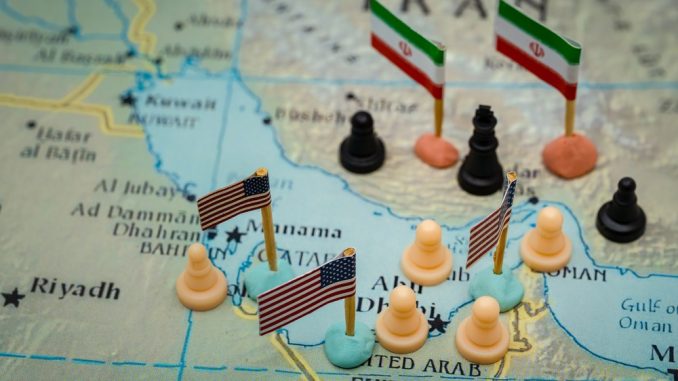
The last time Iran mined the Strait of Hormuz, a single rusted World War I–era device nearly sank a U.S. Navy warship.
That was 1988 – and America's response then was swift and overwhelming.
Now Iran has done it again, Trump has already destroyed 44 of their minelaying vessels, and something happened Tuesday that nobody saw coming.
Iran Mined the Strait of Hormuz and CENTCOM Destroyed 44 of Their Ships
Iran started small. U.S. intelligence picked up roughly a dozen Iranian mines – Maham 3 and Maham 7 type devices – quietly deployed into the strait that carries 20% of the world's oil supply. The number seemed almost insultingly modest for a nation sitting on an estimated stockpile of 5,000 to 6,000 naval mines.
That was the point.
This wasn't a serious mining campaign. Iran still has 80 to 90% of its small boats and minelayers intact. It could seed the strait with hundreds of devices at any moment. What Tehran deployed instead was a signal – proof it still has teeth, designed to extract concessions from a president who had spent weeks methodically dismantling their navy.
Trump didn't blink.
He went to Truth Social and gave Iran a direct order: remove the mines "IMMEDIATELY." Then he promised consequences "at a level never seen before." Then, thirteen minutes later, he announced that CENTCOM had already destroyed 10 inactive minelaying vessels "with more to follow."
By end of day, CENTCOM's official count stood at 16 Iranian minelayers eliminated. By March 19, Chairman of the Joint Chiefs Gen. Dan Caine confirmed the total had reached 44.
Defense Secretary Pete Hegseth put Iran officially "on notice." Trump compared the new enforcement posture to the anti-cartel operations that have been dismantling drug trafficking routes – the same technology and missiles, now aimed at boats attempting to lay mines.
The A-10 Warthog Is Now in the Fight
Here is what Tehran did not plan for: the United States has deployed A-10 Warthog attack aircraft to hunt their mosquito fleet.
The A-10 is built for exactly this mission. Slow speed, extended loiter time, a 30mm autocannon capable of shredding unarmored speedboats, and lightweight APKWS missiles purpose-designed to destroy cheap targets without burning million-dollar prestige munitions on them.
Iranian fast boats – the very craft being used to carry two or three mines apiece into the strait – are exactly the kind of target the A-10 was designed to obliterate.
Meanwhile, CENTCOM has been systematically working through Iran's entire coastal threat architecture. Every major surface combatant in the Iranian navy is now thought destroyed. Land-based anti-ship missile launchers along the Hormuz coastline have been targeted in ongoing strike operations. The United States has done to Iran's conventional naval capability in four weeks what most war planners said would take months.
What remains is the part that's hardest to eliminate: small boats, drones, and mines.
Iran Peace Talks Have Begun and Oil Prices Just Told You Everything
Here's where the story gets interesting.
Trump threatened Saturday to "obliterate" Iranian power plants within 48 hours if Tehran didn't reopen the strait. Iran threatened to strike power plants across Israel and the Gulf in response. Oil shot back above $114 a barrel. Nobody knew if Monday morning would bring a war or a deal.
Monday morning, two hours before U.S. markets opened, Trump posted on Truth Social that the two sides had been having "very good and productive conversations" and was postponing the power plant strikes for five days while talks continued.
Iran's Foreign Ministry publicly denied any negotiations were happening. But a senior Iranian Foreign Ministry official told CBS News that Tehran had "received points from the U.S. through mediators" and they were "being reviewed."
The mediators: Turkey, Egypt, Pakistan, and Oman – all passing messages between Steve Witkoff, Jared Kushner, and Iranian interlocutors including, according to an Israeli official, Iranian parliament speaker Mohammad Bagher Ghalibaf.
By Tuesday, Trump was describing Iran as having made a valuable offer – "a very significant prize" – related to the Strait of Hormuz. He wouldn't specify what it was. Iran kept publicly denying negotiations existed. Pakistan's Prime Minister publicly offered to host formal talks this week. Trump said the war was already won.
The 1988 precedent is instructive here. When Iran mined the Gulf during the Iran-Iraq War, the U.S. launched Operation Praying Mantis – the largest American naval surface engagement since World War II. Iran lost half its operational navy in a single day. That shock produced years of Iranian restraint.
Trump has already inflicted comparable damage in four weeks. The difference this time is that Trump is simultaneously destroying Iran's military capacity and leaving a door open for Iran to exit with something.
The mines – deployed in small numbers, functionally useless as a real blockade – are Iran's way of signaling it wants to walk through that door while saving face for the domestic audience that's watching.
What This Actually Means
Iran is playing the only card it has left. Mine the strait for real and you kill the "permission-based transit" scheme Tehran is using to reward friendly countries and punish enemies – your own mines don't check passports. A dozen devices is a signal, not a strategy.
Trump knows exactly what it is. His five-day pause wasn't weakness – CENTCOM hit an Iranian gas supply line Tuesday while he was publicly describing productive talks. The pause gave Iran a face-saving exit. The strikes kept the pressure on. That's not a retreat. That's leverage.
The last time America cleared a major minefield in this region was 1991 off Kuwait – 51 days, 907 Iraqi mines, with the enemy's maps in hand and the war already over. Doing it live, under missile and drone fire, is a different problem entirely. Iran knows that. Trump knows Iran knows that.
The dozen mines sitting in the world's most important waterway aren't a weapon right now.
They're Iran's white flag in disguise.
Sources:
- Oliver JJ Lane, "Iran Has Laid Small Number of Naval Mines Into Strait of Hormuz, Challenging Peace Talks: Report," Breitbart, March 24, 2026.
- "CENTCOM says 16 Iranian minelayers destroyed as Trump aims to secure Strait of Hormuz," Washington Examiner, March 10, 2026.
- Pete Hegseth, CENTCOM official statements, U.S. Central Command, March 10–19, 2026.
- "US targets mine-laying vessels in the Strait of Hormuz amid blockade disrupting global oil markets," Fox News, March 11, 2026.
- "Trump calls off Strait of Hormuz ultimatum as Iran receives U.S. message from mediators," CBS News, March 23–24, 2026.
- "U.S. negotiating with senior Iranian official: Trump," Axios, March 23, 2026.
- "Trump declares victory and claims Iran offers a 'prize' in talks Iran has denied having," NPR, March 24, 2026.