
California tried to ban gas-powered cars and Washington had to step in to stop them.
Sacramento just found a different way to reach American drivers and nobody in Washington can block it.
What California regulators approved Monday is coming for every driver in America whether they know it or not.
Goodyear Says the Replacement Tire Price Hike Is Far Worse Than Sacramento Claims
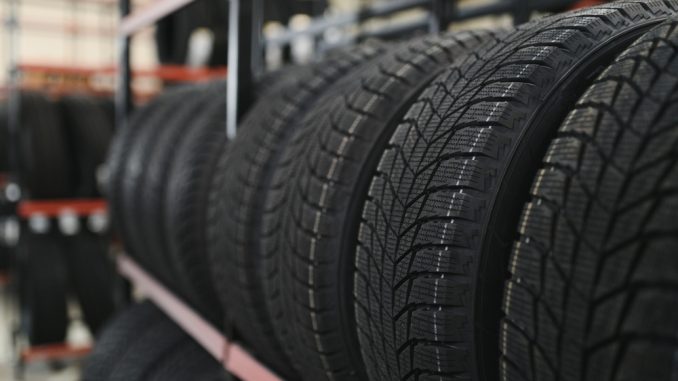
The California Energy Commission voted unanimously Monday to approve the Replacement Tire Efficiency Program – the nation's first efficiency mandate for replacement tires sold to passenger car and light-truck drivers.
Rolling resistance is the target – how hard a tire has to work simply to keep moving. The less resistance, the less fuel a vehicle burns.
California regulators say new factory tires already perform efficiently. The cheaper options drivers typically buy when it's time to replace them do not. Under the new rules, those options disappear – first in 2029, then again in 2033.
By 2033, 70 percent of the replacement tires currently on sale in California will no longer be legal to sell there.
Goodyear showed up to fight. Company representative Bret Gladfelty told the commission the rules would drive up costs for consumers and argued the commission had approved the vote without resolving serious technical and legal disputes over the regulation.
The numbers tell a sharper story than Sacramento wants to admit. The state claims Phase 2 requirements, kicking in by 2033, add an average of $6.50 per tire – roughly $26 for a full set.
Goodyear's formal comments to the CEC put the real-world price premium for compliant tires at $365 per set. The state's projected lifetime fuel savings of $179 do not cover that gap. Under Goodyear's math, this regulation costs California drivers money.
"This ultimately is about protecting consumers," said CEC Chairman David Hochschild.
Californians have heard that line before.
The 2003 Law That Just Banned Replacement Tires Across California
The California Energy Commission did not go looking for this power – and Sacramento buried that fact under the fuel-savings math.
Commissioner Nancy Skinner brought it to Chairman Hochschild. Assembly Bill 844 passed in 2003 and directed the CEC to create a tire-efficiency program. For more than two decades, nobody at the commission acted on it.
Hochschild told reporters at the hearing he had not known the law existed until Skinner raised it.
After the vote, a local television reporter asked Skinner directly whether she had pushed the tire rulemaking. She declined to answer. Asked why the commission waited 23 years to use authority it already held, she told reporters the mandate had simply been waiting for gas prices to make it politically worthwhile.
Translation: Sacramento finally found a reason to care.
This is how Sacramento operates: a law sits on the shelf for a generation, a commissioner dusts it off, and a chairman who never read it votes yes. Millions of drivers wake up to a narrower menu at the tire shop – with a higher price tag on everything that remains.
California Rep. Kevin Kiley fired back the same day. "This latest blow to common sense could cost drivers hundreds of dollars," Kiley wrote after the vote.
Why the California Tire Ban Means Higher Prices for Every American Driver
California's vehicle regulation pattern is well established. The state's Air Resources Board has set tailpipe standards tighter than federal law for more than 50 years.
Seventeen states and the District of Columbia adopted those California emissions rules under a provision of the Clean Air Act – effectively giving Sacramento a second vote over how every automaker designs a nationwide fleet.
The tire industry faces a simpler version of the same choice, and it does not require other states to pass a single law.
California is the largest automotive market in the country. No major tire manufacturer is going to build one product line for California and a separate one for the other 49 states. The economics do not work that way. Companies build to the toughest standard in the room and sell that product everywhere. Drivers in every state pay the difference.
Michelin's government affairs director endorsed the CEC's efficiency targets at Monday's hearing. That was not an act of environmental goodwill. Michelin is one of the world's largest tire manufacturers. A company with global manufacturing scale would rather run one production standard than two.
When Michelin endorses Sacramento's numbers, it is telling every competitor: this is the floor, everywhere, for everyone.
The drivers in Texas, Tennessee, and Ohio who have never heard of the California Energy Commission will find out what it decided when they go to buy tires in 2029.
California has run this play before on tailpipe emissions and gas-powered car sales, and the rest of the country inherited California's choices without a vote.
Sacramento got a vote. The rest of America got the bill.
Sources:
- Louis Casiano, "California regulators pass rules limiting what replacement tires drivers can purchase," Fox Business, August 18, 2026.
- Amy Curtis, "California Just Passed a Law to Make the Price of Tires Skyrocket," Townhall, August 18, 2026.
- Bob Hoge, "California's War on Drivers Speeds Up — Now They're Coming for Your Tires," RedState, August 18, 2026.