
For two thousand years, one town from the Gospels remained buried and unfound.
Last week an archaeologist stood in Washington DC and said the search is over.
Dig into what they pulled out of the ground at the Sea of Galilee – and why the people who said this place never existed have a serious problem.
Biblical Archaeology Just Confirmed Bethsaida Is Real and Here Is What They Found
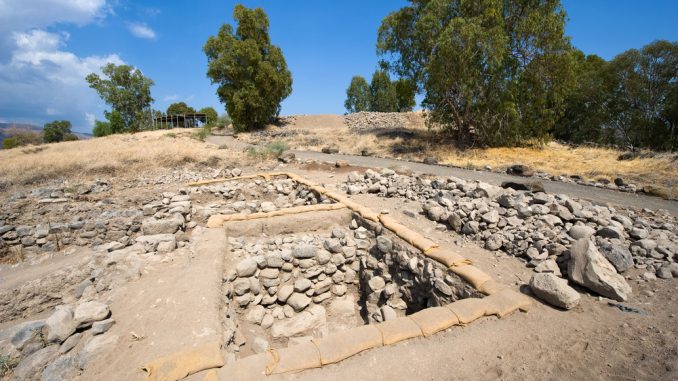
El-Araj sits on the northeastern shore of the Sea of Galilee.
For decades, archaeologists debated whether it – or a rival site called et-Tell – was the real Bethsaida, the fishing village the Gospels name as the hometown of Peter, Andrew, and Philip and the site of some of Jesus's most documented miracles.
The debate is over.
On May 5, excavation director Steven Notley stood before an audience at the Catholic Information Center in Washington DC and announced the dig had "essentially confirmed" El-Araj as biblical Bethsaida.
Notley called it the last of the apostolic-era towns to be identified – the final piece of the first-century map.
Here is what ended the argument.
Beneath the apse of a Byzantine basilica, the team found a first-century structure – a house wall, buried under a church that was built for one reason: to mark the spot where Peter and Andrew lived.
An eighth-century Bavarian bishop named Willibald made a pilgrimage to the Holy Land in 725 AD and wrote that he spent the night in a church built over the home of Peter and Andrew in Bethsaida.
The church the excavators found matches his account exactly.
"We have a first-century house wall under the apse," Notley told EWTN News. "It doesn't have a plaque on it that says 'Peter slept here' – but from a perspective of archaeology, it doesn't get much better than that."
The Apostle Peter Mosaic and the Wildfire That Revealed the Rest of Bethsaida
In 2022, excavators pulled a mosaic from the floor of the basilica inscribed with a two-line Greek petition to the "Chief and Commander of the Heavenly Apostles" – the exact title Byzantine Christians used for Peter.
The inscription also referenced a donor named Constantine and asked Peter to intercede for his family.
Notley said it was "the earliest archaeological evidence of the faith that recognizes Peter as the chief of the apostles."
Centuries of Byzantine pilgrims had made the journey to Bethsaida specifically to honor Peter's house there – not in Capernaum, as many modern scholars assumed.
The mosaic confirmed the pilgrims were right.
Then a wildfire swept through the area in 2025 and stripped away dense underbrush that had been hiding the site for generations.
When the smoke cleared, archaeologists found columns, structural mounds, ancient walls, Roman-era pottery, and the remains of a Roman bathhouse.
They also found something unexpected – Herodian lamps.
Those lamps were only manufactured in Jerusalem before AD 70.
Finding them at El-Araj means residents of Bethsaida were making pilgrimages to the holy city during the lifetime of Jesus – buying lamps in Jerusalem and carrying them home to the Sea of Galilee.
Meanwhile, the rival site et-Tell had 30 years of excavation and produced almost nothing from the New Testament period.
Not one eighth-century church or structure that matched the written accounts.
The contrast is not subtle.
You Already Knew the Bible Was Real and Biblical Archaeology Keeps Proving It
You have seen this before.
Pontius Pilate – the Roman governor who ordered the crucifixion – was called a possible literary invention because Roman records seemed silent on him.
In 1961 a limestone block came out of the ground at Caesarea Maritima inscribed with his name and title: Pontius Pilate, Prefect of Judea.
The Pool of Siloam – where Jesus healed the blind man in the Gospel of John – was called a theological symbol, not a real place.
In 2004, construction workers repairing a water pipe in Jerusalem uncovered its stepped stone edges.
Coins at the site dated to the lifetime of Jesus.
Every time.
The Gospels name Bethsaida more than a dozen times.
Jesus healed a blind man there, fed thousands nearby, and rebuked the town by name for witnessing miracles and failing to repent – the kind of pointed, specific detail that comes from someone who was there, not someone inventing backdrop.
And now there is a first-century house under a church under fourteen centuries of sediment at the exact location the written record described.
The men who wrote the Gospels were writing about places they had walked, people they had known, and events they had witnessed.
The ground has been confirming it for decades.
It just confirmed it again.
Sources:
- Peter Pinedo, "Bethsaida Excavation Turning 'Bible Stories Into Bible Realities,'" National Catholic Register, May 7, 2026.
- Peter Pinedo, "Bethsaida excavation turning 'Bible stories into Bible realities,'" Catholic World Report, May 7, 2026.
- Marek Dospěl, "Where Is the House of Saint Peter the Apostle?" Biblical Archaeology Review, March 21, 2026.
- Danny Herman, "New Inscription Confirms Bethsaida at El-Araj Site," dannythedigger.com, November 2024.
- Museum of the Bible, "Updates from the Field: El-Araj with Dr. Steven R. Notley," museumofthebible.org.